Letters from Lunenburg
Your mailbox used to be worth checking.
It can be again.
Once a month, Hattie Zwicker — 82, widowed, Lunenburg, Nova Scotia — writes you a letter. Not a story about other people. A letter. To you. On paper. In your mailbox.
She writes once a month
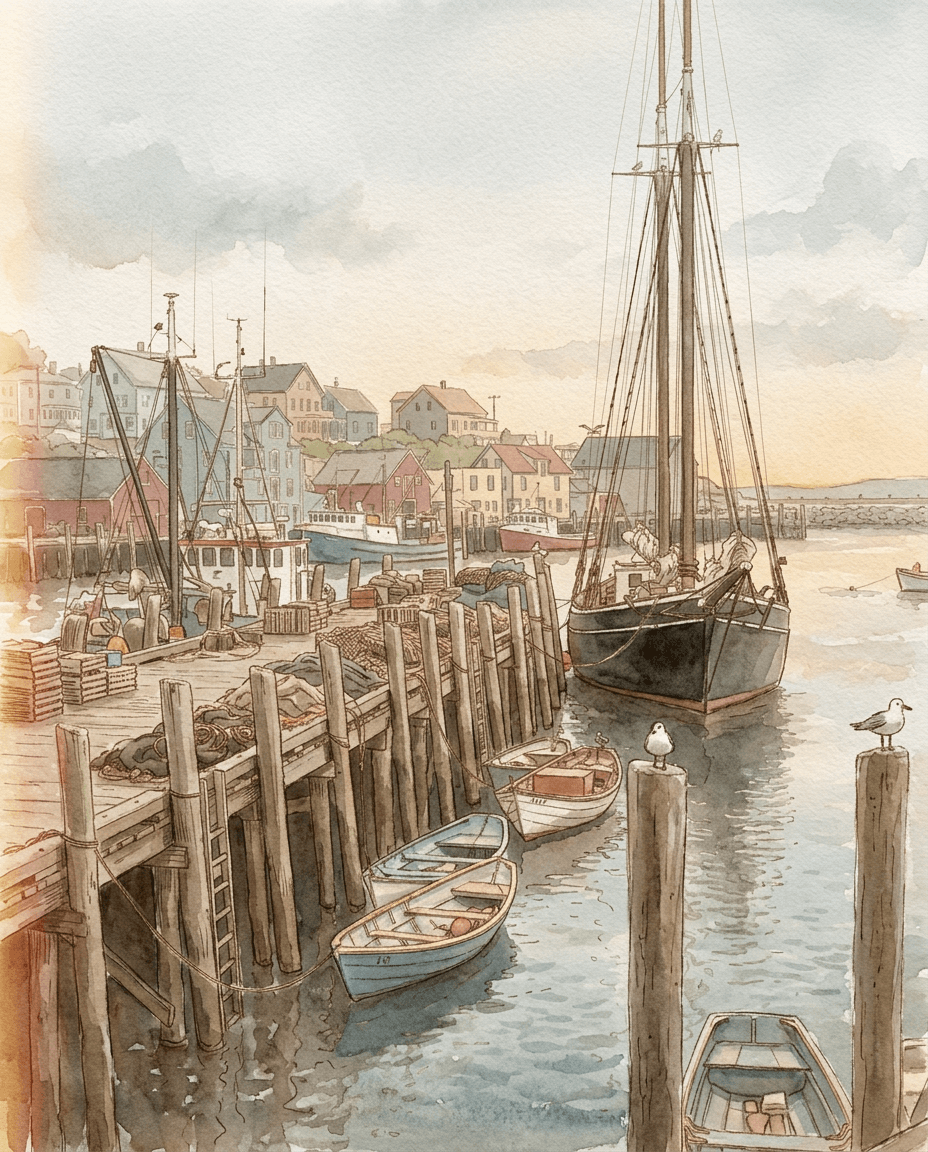
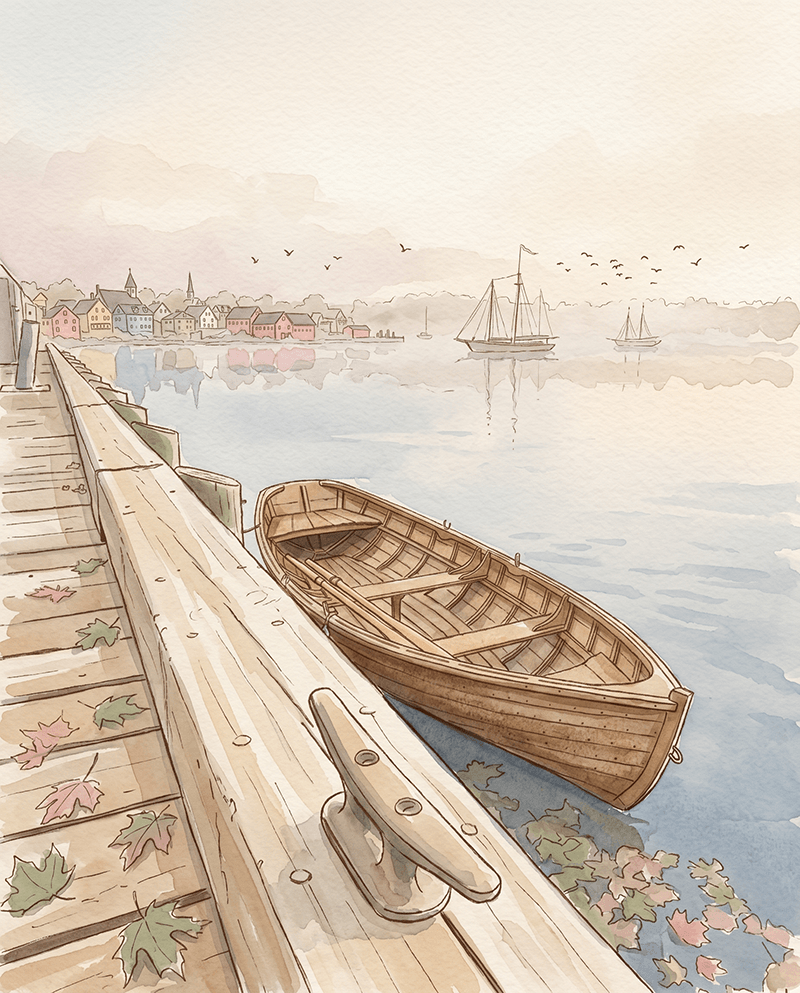
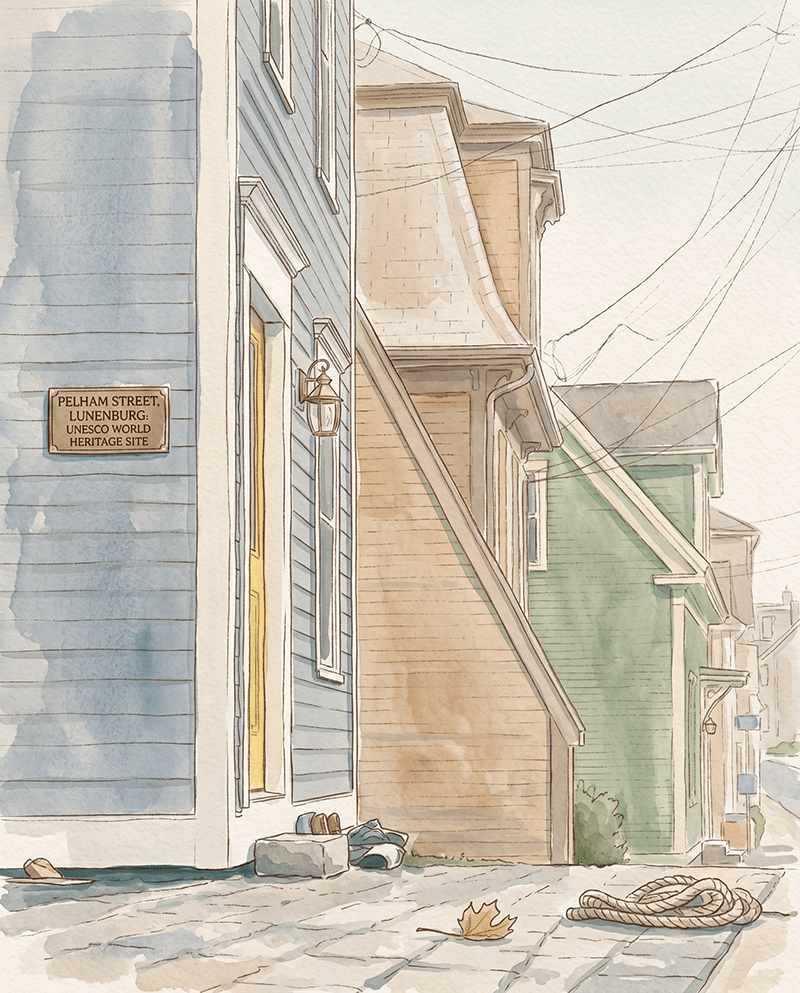
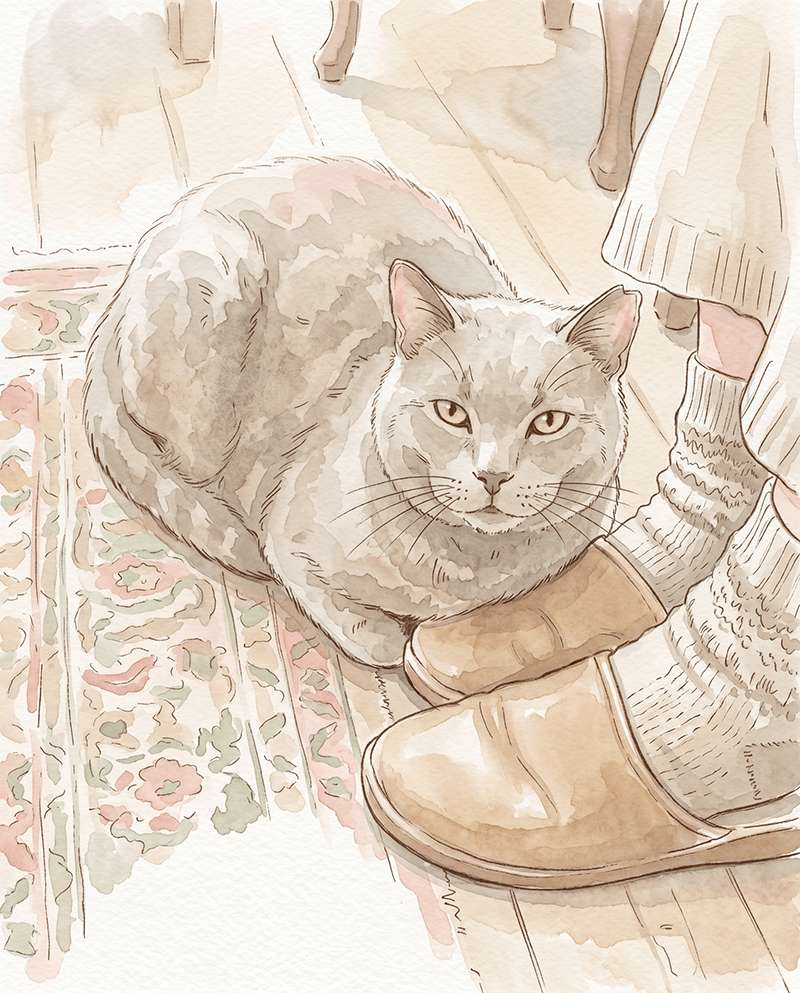
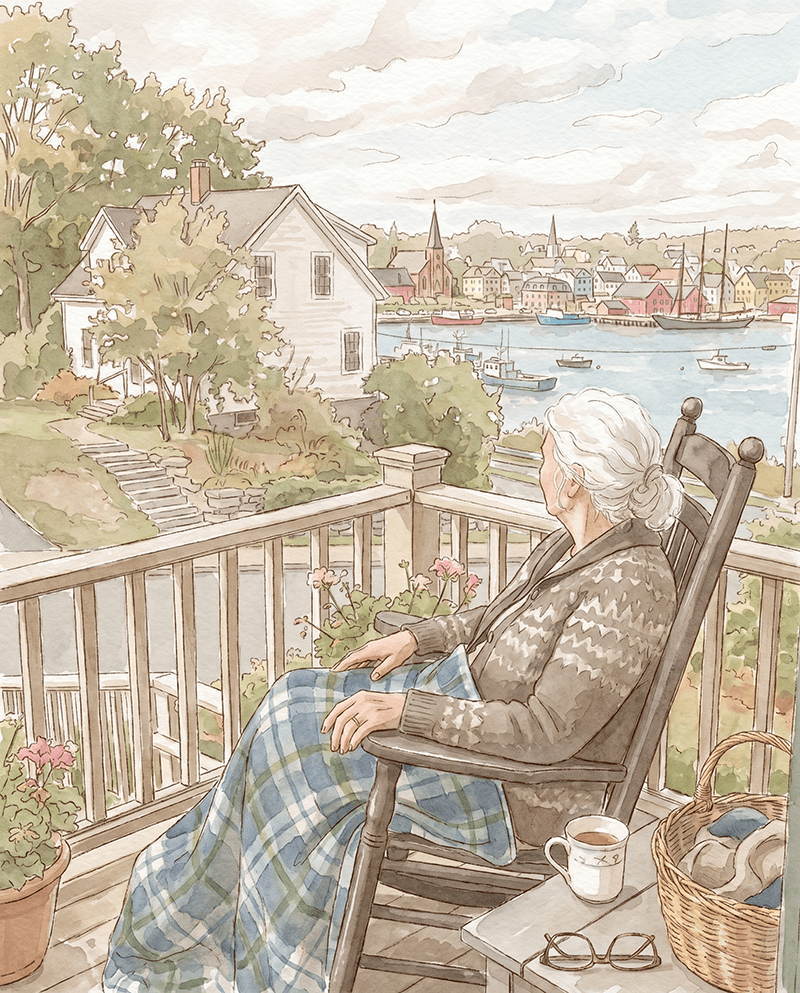
She lives in a dark red house on a hill in Lunenburg with a view of the harbour and a cat named Smoke. Earl died in 2019 and she is still in that house. She is not moving. Eight decades of watching, and she has earned every opinion she holds.
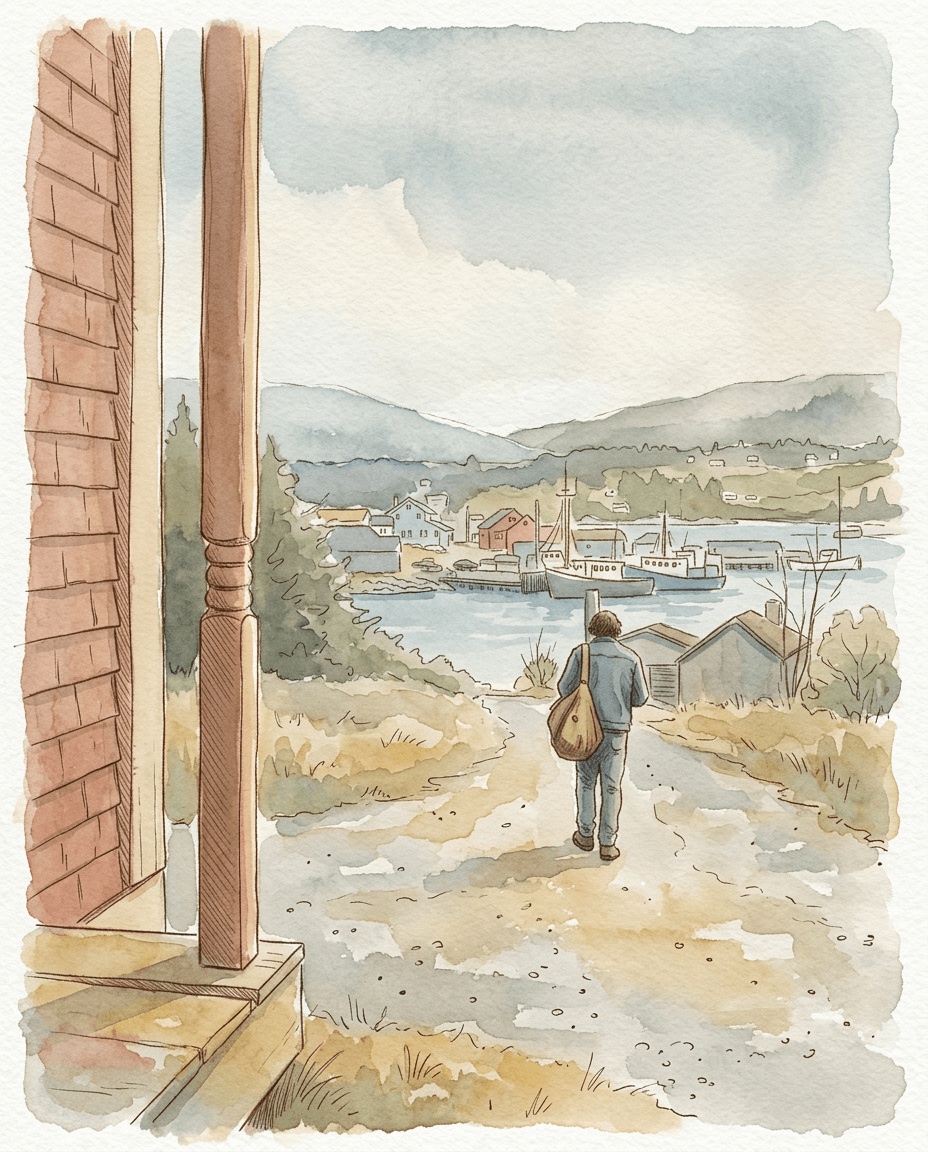
Once a month, she writes you a letter. A real one. On paper. In an envelope. With a stamp. Not to a fictional character. Not a story you watch from outside. A letter addressed to you. It will still be there the next morning.
For
You
Wherever you are
finding yourself these days
From
Hattie May Zwicker
Lunenburg, Nova Scotia
Who is Hattie
Lunenburg, Nova Scotia · Fisherman's wife · Still there
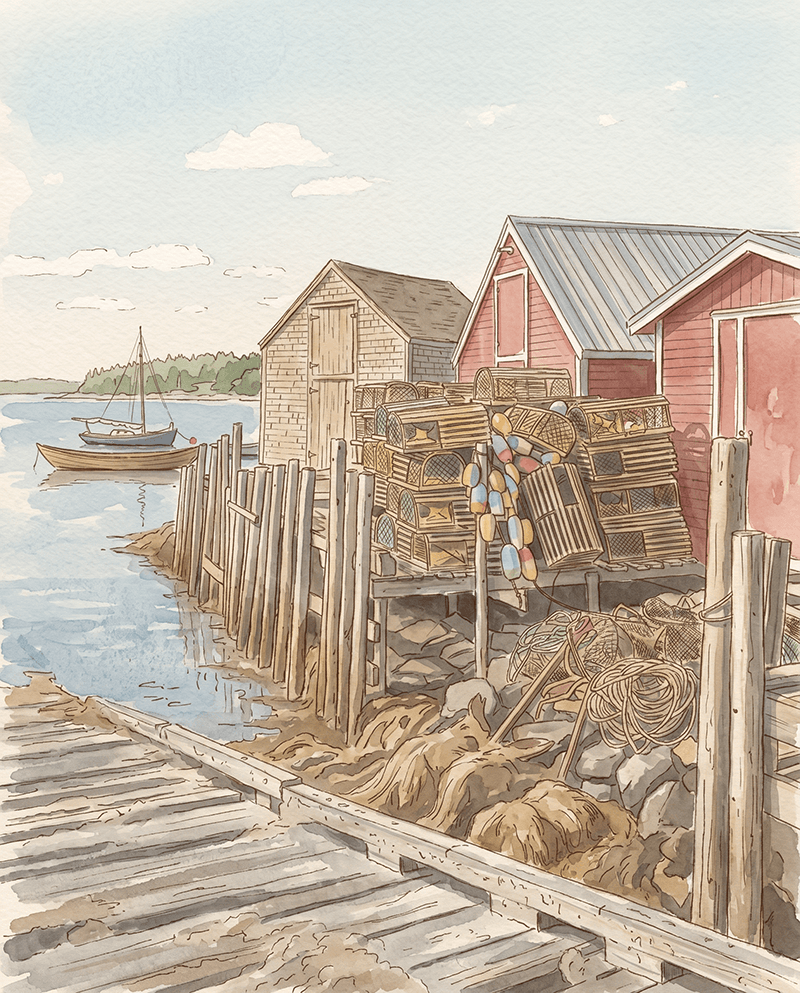
Her people came from Germany in 1752 and have been fishing the Grand Banks, building boats, and burying their dead in Lunenburg County ever since. She knows what it means to watch a way of life collapse. She was there in 1992 when the federal government shut down the cod fishery overnight and her son left for Alberta at 23 and never really came back.
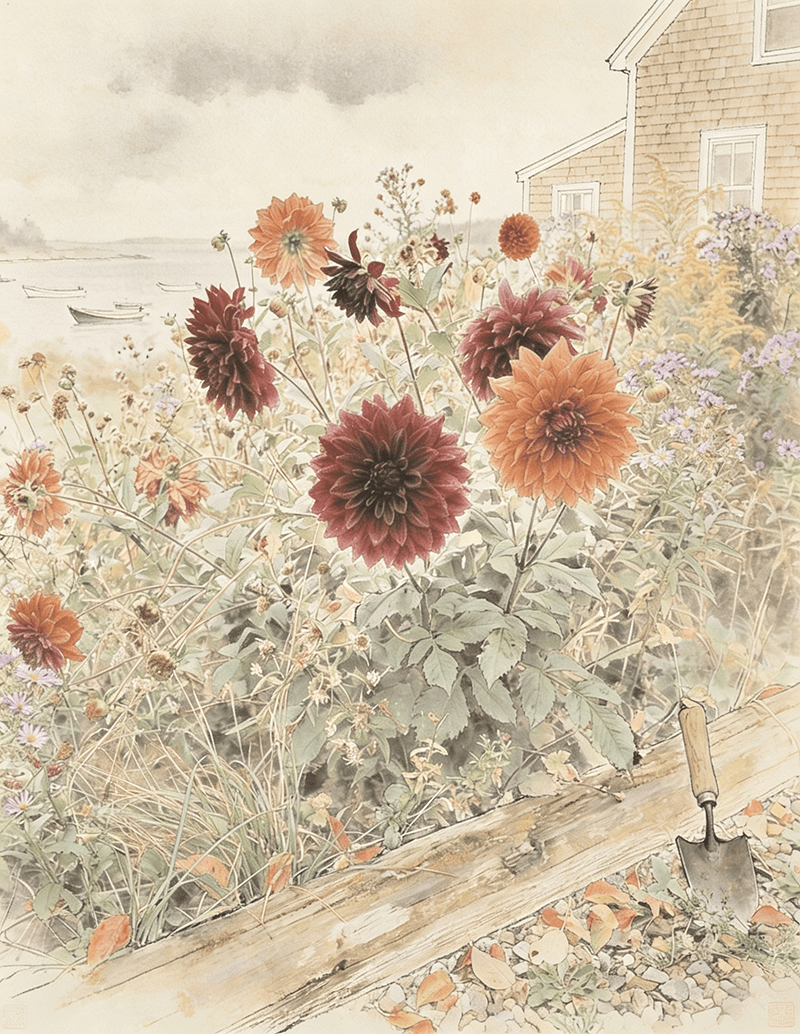
She grows dahlias. Makes her own bread every week. Has opinions about your phone that she will share without being asked. She is not soft. But she is kind in the way that costs something.
She has kept a diary since 1960. Sixty-five years of ordinary life, written down. You will read some of it.
Hattie is a fictional character. The letter in your mailbox is real.
This is for anyone who
The grief does not always have a name. Sometimes she is still here and you are far away. Sometimes she has been gone for years and something small still stops you cold. Sometimes you never had one close and you have never quite known where to put that.
Different city, different country. You call when you can. You know you do not call enough. There is a whole version of her daily life you are missing: the particular Tuesday details she would mention if you were there.
There is something in her handwriting that stopped you cold. A recipe card, a birthday card from years ago. You have not thrown it out. Part of you would give anything to read something new from her, to know what she would make of this world right now.
You watched other people's grandmothers with a specific, quiet attention. The rocking chair, the cookie tin, the particular way she said your name. You know what you missed. You have carried that a long time without a name for it.
What makes this different
Fiction mail clubs put you in the audience. You read letters that fictional characters write to each other. A voyeur at the window. It is lovely, but you are not in it.
Hattie writes to you. The letter is addressed to you. The opinions are directed at you. The recipe on the back is for you to make. When she signs off, Mind how you go, she means you specifically.
Once you have received one, you will feel the difference.
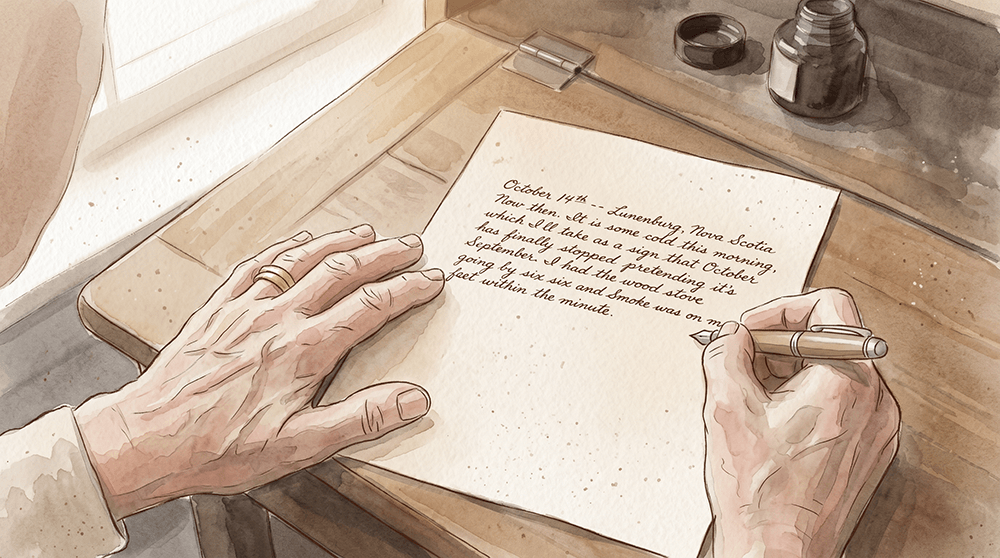
October 14th — Lunenburg, Nova Scotia
Now then. It is some cold this morning, which I'll take as a sign that October has finally stopped pretending it's September. I had the wood stove going by six and Smoke was on my feet within the minute. He'll ignore you all summer and the moment there's heat involved you're his closest friend. Earl used to say he'd had crewmates like that.
I made the beet pickles on Tuesday. Fourteen jars. More than I need, but the number feels right. There's something satisfying about a pantry shelf in October that I can't explain to anyone who hasn't earned it.
I was reading something this week about how young people are anxious about everything now. I don't say that unkindly. The world they're navigating is genuinely strange. But I keep thinking: we were anxious too. We just didn't have a word for it that turned it into a category. When Earl was three weeks past due back from the Banks and the weather had been bad, I wasn't doing well. I was gutting fish at the plant and keeping the children fed and I wasn't doing well. We called it Tuesday.
The recipe is on the back. Don't skip the dill. That's not a suggestion.
Mind how you go. — Hattie
Every month. On paper. In your mailbox.
From her diary
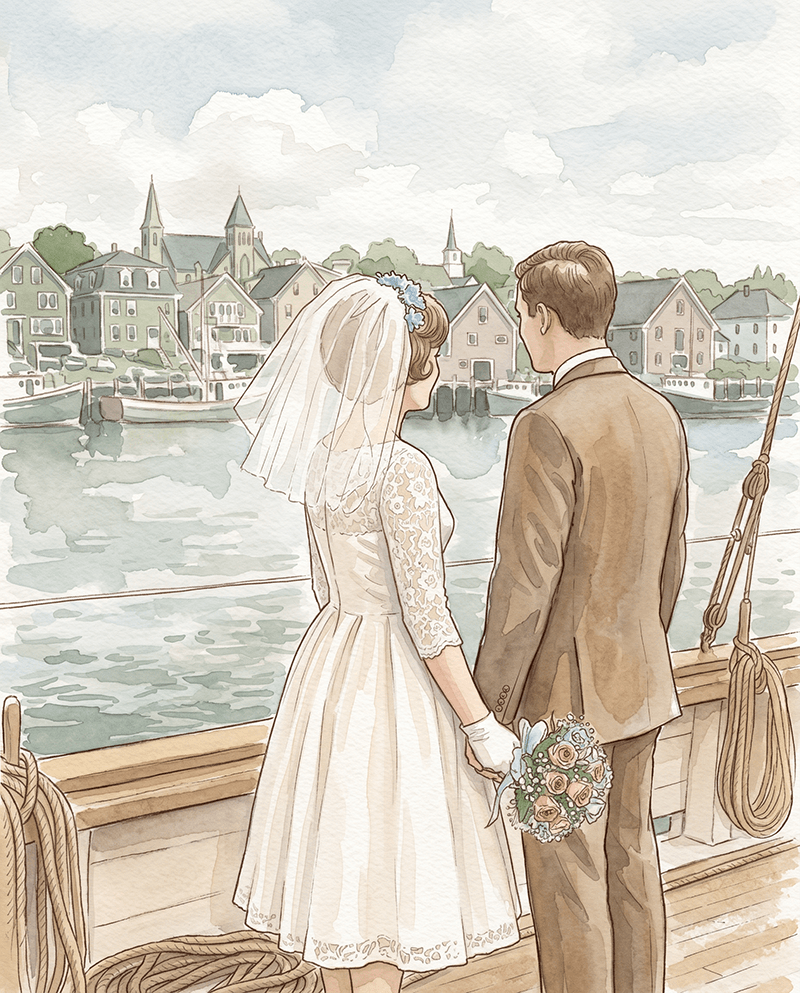
June 3, 1967 — She had been married three months.
I knew what I was marrying. You can't grow up here and not know. I sat at three weddings this year alone and I knew exactly what those girls were walking into and I thought I understood it. I understood it like you understand cold before the first real winter of your life. You know the word. You don't know the thing yet.
I just can't tell yet if fine is a thing I'm feeling or a thing I'm deciding.
Young Hattie. Same voice. Different world. Every letter includes a page like this.
What comes in the envelope
Nothing digital. Nothing that needs a charger. Nothing that disappears when you close it.
The season, what she has been thinking, something she is not finished with yet. Opinionated. Honest. Not vague. Written as if she means it, because she does.
A page from her diaries, decades back. Young Hattie — same voice, different world. You will see where the certainty came from, and what it cost to earn it.
Not a magazine recipe. Instructions from someone who has made this dish a hundred times and knows exactly where you will go wrong. The kind of food that tastes like memory. Not your memory. Something older, passed down.
Photos show what we looked like. Letters reveal who we were.
On why Hattie kept a diary for sixty-five years
Each letter accumulates. What you are building, month by month, is an archive: a grandmother's life in your hands, the kind of thing people find in an attic and stand there reading for an hour they did not plan to spend.
"She watched her way of life collapse in a government announcement. She kept going. She has something to teach you about that."
In 1992, Ottawa closed the Grand Banks cod fishery. The stocks had collapsed after years of industrial trawling had gutted what sustained communities since 1497. Overnight, the industry that built Lunenburg, that employed Hattie's husband and half the men she knew, was gone. Her son Dale left for Fort McMurray at 23. So did a generation from every maritime town in Atlantic Canada.
If you grew up in a mill town, a mining town, a factory town, a farming community that could not compete with industrial agriculture, you already know this story from the inside. The announcement. The silence after. The people who stayed and the people who left and the question of which of them made the right call.
Hattie stayed. She kept the house. She kept the garden. She kept the diary. She is not offering reassurance. She is offering something harder and more useful: proof that a person can continue.
Give someone Hattie
For the person who has everything. For someone going through a hard season. For anyone who misses a grandmother. The right letter, once a month, tells someone they are thought of without saying a word of it directly.
Mother's Day
"Give her someone to look forward to in the mailbox."
For your mother, your mother-in-law, or any woman who would lean into a letter from someone who has lived something real.
Christmas
"Not a thing. An ongoing relationship."
For the person who does not need more objects. Something that arrives twelve times in the coming year, each letter more itself than the last.
Hard seasons
"Something real on a random Tuesday."
Grief, loneliness, a difficult year. A letter that asks nothing of them, expects nothing back, and simply shows up.
Gift subscriptions available at checkout: 3 months, 6 months, or a full year.
Letters launching soon
Leave your email. We'll write when there's something worth reading. Hattie would not have it any other way.
$10.99 CAD · $9.99 USD · per month · cancel anytime
You are on the list.
We will write when subscriptions open. In the meantime, mind how you go.